Books > Generative artificial intelligence and informal digital learning of English
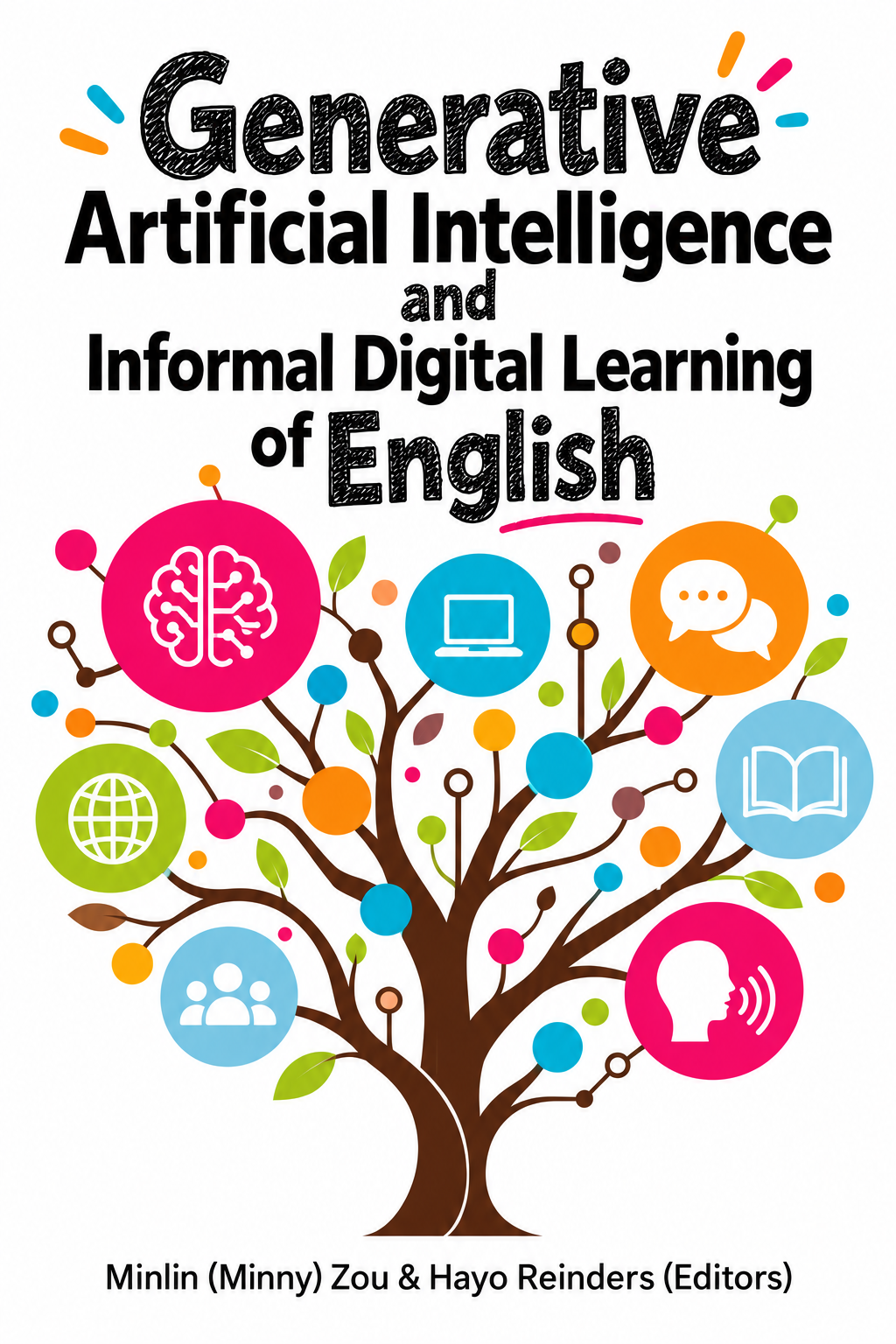
Zou, M. & Reinders, H. (Eds.), (2027). Generative artificial intelligence and informal digital learning of English. Palgrave Macmillan (forthcoming).
About this book
Informal Digital Learning of English (IDLE), defined as self-directed, independent, and autonomous English learning through digital technologies beyond the classroom (Lee & Dressman, 2018), has emerged as one of the most dynamic and consequential developments in language learning worldwide. As noted in Lee (2021), IDLE encompasses both receptive and productive forms of digital engagement, ranging from the consumption of online video, digital gaming, and social media to online collaboration, fanfiction writing, livestream interaction, and participation in virtual communities. It further foregrounds the complementary roles of form-focused (e.g., grammar, vocabulary, and sentence structure) and meaning-focused (e.g., comprehension and communication) learning activities in digital environments (Zou et al., 2025).
In recent years, Generative Artificial Intelligence (GenAI), powered by large language models (LLMs), has introduced unprecedented opportunities and challenges for language learning and teaching (Barrot, 2023). Tools such as ChatGPT and DeepSeek are capable of processing complex linguistic patterns and generating contextually appropriate, prompt-responsive outputs. These technologies offer increasingly sophisticated forms of personalization and adaptability, supporting activities such as idea generation, feedback provision, multimodal content creation, interactive dialogue, customized learning pathways, and simulated roles (e.g., examiner or conversational partner) (Kohnke et al., 2023). As a result, GenAI is rapidly transforming how learners engage with English across digital environments, reshaping language learning both within and beyond formal educational contexts. The emergence of GenAI-mediated IDLE thus represents a critical development within contemporary language learning ecologies.
This edited volume brings together cutting-edge research examining how GenAI-mediated IDLE is reshaping learners’ linguistic development, as well as their identities, motivation, emotions, cognition, curiosity, critical literacies, and autonomy. It also considers the implications of these developments for teachers, institutions, and policymakers.
Aligned with the aims of the New Language Learning and Teaching Environments series and in particular its emphasis on learner-centred pedagogies, out-of-class learning, and the impact of technology, this volume positions GenAI-IDLE as both a sociocultural phenomenon and an emerging pedagogical frontier.
Recent research indicates that (GenAI-)IDLE can enhance vocabulary, grammar, speaking, reading, listening, confidence, enjoyment, and intercultural competence (Pan et al., 2025; Schurz & Sundqvist, 2025). It also expands learner agency, increases exposure to multimodal and authentic input, and connects learners to global networks. Informal digital spaces are becoming increasingly significant as formal education systems continue to evolve in response to digitalisation, AI integration, and the expansion of hybrid learning environments.
However, despite its considerable potential, research consistently highlights limited institutional preparedness, insufficient teacher training, curricular misalignment, and persistent tensions between autonomous informal engagement and assessment-driven educational systems (Toffoli & Sockett, 2015; Lee & Drajati, 2019b). In addition, the growing role of algorithmically mediated learning raises critical questions about control, agency, and epistemic transparency.
This volume therefore addresses a set of urgent questions:
- How do learners leverage GenAI tools (e.g., ChatGPT, Gemini, DeepSeek) to support informal English learning?
- What social, motivational, emotional, cognitive, and identity-related processes characterize GenAI-mediated IDLE?
- What factors enable or constrain the meaningful integration of GenAI-IDLE into formal learning contexts?
- How can teachers scaffold, assess, and align GenAI-IDLE practices with curricular goals?
- What is the impact of GenAI-IDLE on learner agency?
- How can learners and teachers develop critical AI and digital literacies to engage with GenAI in ethically and pedagogically informed ways?
Through theoretically grounded, contextually rich, and practice-oriented chapters, this volume offers a comprehensive synthesis of global research on GenAI-mediated IDLE, alongside concrete pedagogical applications and directions for future research and policy.
Table of contents
Part I — Foundations, Frameworks, and Critical Dimensions of GenAI-IDLE
- Introduction: Rethinking Informal Digital Learning of English in the Age of Generative AI (GenAI)
- Identity, capital, and ideology: A critical framework for GenAI-IDLE
- Hybrid Competence in GenAI-Mediated Informal Digital Learning of English (IDLE): Reframing Agency and Competence in AI-Enabled Learning Ecologies
- Framing Human Agency in Generative AI Mediated Intelligent Learning Systems across Formal and Informal Contexts: Introducing the Pedagogically Agentic Cross-contextual Education Framework
- Datafied Tongues: Privacy, Ethics, and Data Practices in GenAI-Mediated Informal Digital Language Learning Platforms
- “AI Doesn’t Judge Me”: An Exploratory Study about Participation, Emotional Safety, and Inclusion in GenAI-mediated Informal English Learning across China, UK, and Thailand
Part II — GenAI-IDLE and Language Outcomes: Beyond the Benefits
- Assessing Metacognitive Awareness in Informal Digital Learning of English
- Mapping Chinese Undergraduate EFL Learners’ Perceptions of GenAI-IDLE Speaking: An Activity Theory Analysis of Affordances, Reconfigured Learner Roles, and Contradictions
- A Systematic Review of GenAI-IDLE: Research Gaps and Equity-Related Differences in Informal Digital L2 Education
- Boredom and enjoyment in GenAI-mediated out-of-class English conversation practice: A micro-longitudinal qualitative study in Poland
- Translanguaging and Generative AI in Informal Digital Learning of English in Chinese Higher Education
Part III — Pedagogy, Teacher Education, and Ethical Integration
- Pedagogical Models for Bringing GenAI-IDLE Into the Classroom Critically
- Noticing, self-regulation, and algorithmic authority in AI-supported pronunciation feedback from Spanish teachers’ perceptions
- Chinese EFL Learners’ Ethical Perception and Use of ChatGPT in AI-Mediated Informal Digital Learning of English: A Mixed-Methods Study of Self-Reported Outcomes and Practices
- Regulating the Self, Orchestrating Interaction, and Acting Responsibly: A Positive Computing Perspective on Digital Wellbeing in GenAI-IDLE
- Conclusion: Building Ethical, Empowering, and Sustainable GenAI-IDLE Futures