About me > CV
You can download a PDF version of my CV here.
Hayo Reinders
Curriculum Vitae
info@innovationinteaching.org | www.innovationinteaching.org
October 2026
1 Academic Profile
Hayo Reinders is Professor at the National Institute of Education, Nanyang Technological University, Singapore; Senior Professor of TESOL and Director of Research at Anaheim University, USA; and Senior Research Principal at Kanda University of International Studies, Japan. He is also Director of the Institute for Teacher Leadership.
Hayo works at the intersection of innovation and implementation, with particular interest in educational technology, teacher leadership and research–practice partnerships. He is the author of over 40 books and 250 scientific papers in areas including leadership, transformative technologies and informal learning.
2 Academic Appointments
Current appointments

Current Professor, National Institute of Education, Nanyang Technological University, Singapore.

2014–present Senior Professor of TESOL and Director of Research, Anaheim University, USA.

2015–present Senior Research Principal, Kanda University of International Studies, Japan.
Previous appointments

2006–2026 Professor of Applied Linguistics, King Mongkut’s University of Technology Thonburi, Thailand.

2014–2019 Professor of Education and Head of Education, Unitec, New Zealand.
2015–2019 Dean of the Graduate School, Anaheim University, USA.

2008–2012 Head of Academic Development, Middlesex University, UK.

2000–2006 Director of the English Language Centre, University of Auckland, New Zealand.
3 International Visiting Appointments
4 Academic Leadership, Advisory and Consultancy Roles
5 Education and Qualifications
6 Current Research Projects and Grants
General Research Fund (GRF) (#18605024): Effect of Informal Digital Learning of English (IDLE) on Speaking Proficiency, via Anxiety, Enjoyment, and Willingness to Communicate. HK$ 601,250 (US$ 77,000).
General Research Fund (GRF) (#18609425): Enhancing speaking skills in less resourced regions: AI-mediated Informal Digital Learning of English (AI-IDLE). HK$ 645,800 (US$ 82,300).
Standing Committee on Language Education and Research (SCOLAR) (#1047-2050-8080-9020-00049): Integrating Informal Digital Learning of English (IDLE) in improving EFL learners’ willingness to communicate and speaking. HK$ 736,900 (US$ 94,200).
7 Editorial Leadership and Journal Appointments

8 Guest-Edited Special Issues
10 Publications
Forthcoming books and edited volumes
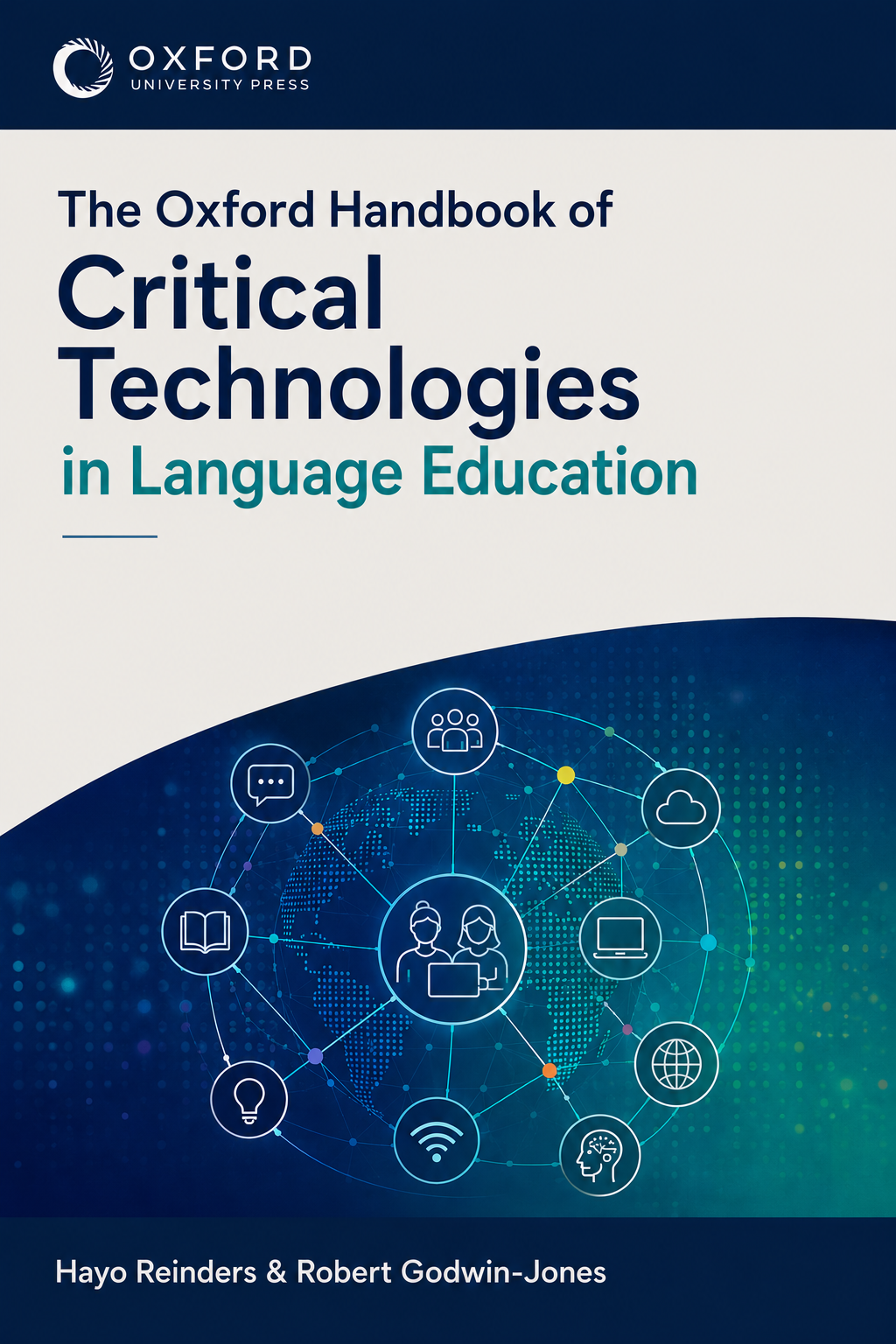
Reinders, H. & Godwin-Jones, R. (2027). AI and Transformative Technology in Language Learning. Oxford University Press (forthcoming).
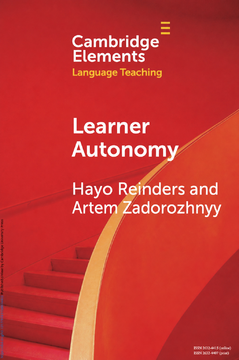
Reinders, H. & Zadorozhnyy, A. (2027). Learner Autonomy. Cambridge Elements. Cambridge University Press (forthcoming).
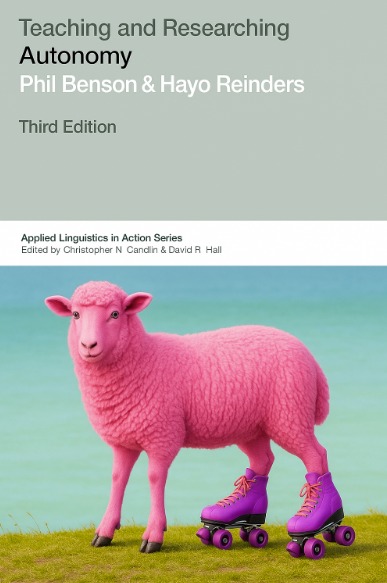
Benson, P. & Reinders, H. (2027). Teaching and researching autonomy (third, revised edition). Routledge (forthcoming).
Sundqvist, P., Sylven, L. & Reinders, H. (Eds.) (2027). Innovation in language learning and teaching: The case of the Nordics. Palgrave Macmillan (forthcoming).
Zadorozhnyy, A., Smagulova, J. & Reinders, H. (Eds.) (2027). Innovation in language learning and teaching: The case of Kazakhstan. Palgrave Macmillan (forthcoming).
Zou, M. & Reinders, H. (Eds.), (2027). Generative artificial intelligence and informal digital learning of English. Palgrave Macmillan (forthcoming).
Books and edited volumes
Chong, S-W., Reinders, H. & Liu, Q. (Eds.), (2026). Research-practice partnership in language education. Palgrave Macmillan.
Reinders, H., Park, K. & Lee, J. (Eds.), (2025). Innovation in language learning and teaching: The case of Korea. Palgrave Macmillan.
Chong, S.W. & Reinders, H. (Eds.). (2024). Innovation in language learning and teaching. The Case of England, Northern Ireland, Scotland, and Wales. Palgrave Macmillan.
Reinders, H., Phung, L. & Pham, H. (Eds.). (2024). Innovation in language learning and teaching: The case of Vietnam and Cambodia. Palgrave Macmillan.
Reinders, H. (2023). From teacher to teacher leader. Cambridge University Press.
Reinders, H. (Ed.). (2023). Language teacher leadership. Insights from theory and practice. Palgrave Macmillan.
Chong, S.W. & Reinders, H. (Eds.). (2023). Innovation in learning-oriented language assessment. Palgrave Macmillan.
Navarro, D., Carter, B., Roberts, N., & Reinders, H. (Eds.). (2023). Innovation in language learning and teaching: The case of the Caribbean. Palgrave Macmillan.
Reinders, H., Lai, C., & Sundqvist, P. (Eds.). (2022). The Routledge encyclopedia of language learning beyond the classroom. Routledge.
Reinders, H., Coombe, C., Littlejohn, A., & Taffazoli, D. (Eds.). (2019). Innovation in language learning and teaching: The case of the Middle East and North Africa. Palgrave Macmillan.
Reinders, H., Ryan, S., & Nakamura, S. (Eds.). (2019). Innovation in language learning and teaching: The case of Japan. Palgrave Macmillan.
Reinders, H., Nunan, D., & Zou, B. (Eds.). (2017). Innovation in language learning and teaching: The case of China. Palgrave Macmillan.
Reinders, H., Lewis, M., & Phung, L. (2016). Studying in English. Strategies for success in higher education. Palgrave Macmillan.
Thomas, M., Peterson, M., Reinders, H., & Sykes, J. (Eds.). (2016). Digital language learning and teaching: Volumes I–IV. Bloomsbury.
Darasawang, P. & Reinders, H. (Eds.). (2015). Innovation in practice: Lessons from Thailand. Palgrave Macmillan.
Reinders, H. & Lewis, M. (2014). Facilitating workshops. Palgrave Macmillan.
Reinders, H. & Thomas, M. (Eds.). (2014). TBLT in Asia: Challenges, opportunities and future directions. Bloomsbury.
Lewis, M. & Reinders, H. (Eds.). (2014). New ways in teaching adults. TESOL.
Thomas, M., Reinders, H., & Warschauer, M. (Eds.). (2012). Contemporary computer-assisted language learning. Continuum.
Reinders, H., (Ed.). (2012). Digital games in language learning and teaching. Palgrave Macmillan.
Benson, P. & Reinders, H. (Eds.). (2011). Beyond the language classroom. The theory and practice of informal language learning and teaching. Palgrave Macmillan.
Loewen, S. & Reinders, H. (2011). Key concepts in second language acquisition. Palgrave Macmillan.
Thomas, M. and Reinders, H. (Eds.). (2010). Task-based language teaching and technology. Continuum.
Reinders, H., Lewis, M., & Kirkness, A. (2010). Good teacher, better teacher. Strategies for the multicultural classroom. Perceptia Press.
Reinders, H. (2010). The effects of task type and instructions on second language acquisition. Cambridge Scholars Publishing.
Ellis, R., Loewen, S., Erlam, R., Philp, J., Elder, C., & Reinders, H. (2009). Implicit and explicit knowledge in a second language. Multilingual Matters.
Reinders, H., Moore, N., & Lewis, M. (2008). The international student handbook. Palgrave Macmillan.
Lázaro, N. and Reinders, H. (2008). Independent learning centres: Tips for teachers. NCELTR.
Lewis, M. & Reinders, H. (2007). Using student-centered methods with teacher-centered students. Pippin Publishing.
Lamb, T. & Reinders, H. (Eds.). (2007). Learner and teacher autonomy: Concepts, realities and responses. John Benjamins.
Lamb, T. & Reinders, H. (Eds.). (2006). Supporting independent learning: Issues and interventions. Peter Lang.
Reinders, H., Lewis, M., & Kirkness, A. (2006). Transform your teaching. Strategies for the multicultural classroom. Pearson Education.
Cotterall, S. & Reinders, H. (2004). Learner strategies: A guide for teachers. RELC.
Lewis, M. & Reinders, H. (2003). Study skills for speakers of English as a second language. Palgrave Macmillan.
Position papers
Reinders, H. (2024). Humanising technology in language learning and teaching. Oxford University Press.
Reinders, H. (2023). The key to self-regulated learning: A systematic approach to maximising its potential. Oxford University Press.
Reinders, H. (2023) Supporting refugees. A primer for language teachers. Oxford University Press.
Reinders, H., Dudeney, G., & Lamb, M. (2022). Using technology to motivate learners. Oxford University Press.
Manuscripts under review
Hays, J., Reinders, H. & Ortega, N. (2026). Problems with problem-solving: An ecosystem model of problem-solving skills development and implications for the Sustainable Development Goals. Under review. Preprint: https://www.preprints.org/manuscript/202609.2694
Forthcoming articles and chapters
Derakhshanh, A. & Reinders, H. (2027). Multilingual learners’ psycho-affective traits in the age of AI. Journal of Multilingualism, (forthcoming).
Zou, M., Reinders, H., Wang, W. & Guan, P. (2027). Assessing the effects of GenAI feedback practices on multilingual learners writing enjoyment and writing growth mindset: A longitudinal intervention study. Journal of Multilingualism, (forthcoming).
Kukulska-Hulme, A., Reinders, H. & Liu, M. (2027). Conversational AI in language learning. In: Ilich, P. (Ed.), Springer handbook AI and education, (forthcoming).
Zou, M. & Reinders, H. (2026). Can incorporating GenAI chatbots into L2 writing instruction promote student agency and writing performance? Insights from a mixed-methods quasi-experimental study. CALL Journal, (forthcoming).
Reinders, H. (2026). Technology and autonomy. In: L. Liontas (Ed.), The TESOL encyclopedia of English language teaching. Wiley (forthcoming).
Reinders, H. & Sundqvist, P. (2026). Technology beyond the classroom and instructed second language acquisition. In: S. Loewen & M. Sato (Eds.), The Handbook of instructed second language acquisition. Routledge (forthcoming).
Reinders, H. & Zadorozhnyy, A. (2026). The dark matter of language learning: The case of space and time. In A. Al-Hoorie & T. Gregersen (Eds.), The motivation of uncertainty, Applied Linguistics Press (forthcoming).
Zou, M., Reinders, H. & Akhter, S. (2026). Learning beyond the classroom in Bangladesh: The roles of growth mindset and enjoyment in generative AI-mediated Informal Digital Learning of English (GenAI-IDLE). In: A. Rahimi, A. Gimeno-Sanz, A. & A. Sevilla-Pavon (Eds.), Toward artificial intelligence-assisted language learning: From theory to practice. Routledge, (forthcoming).
Journal articles
Reinders, H. (2026). From learner autonomy to hybrid autonomy: A research agenda. Artificial Intelligence in Language Education, 2, 104233. https://doi.org/10.29140/aile.2026.104233
Reinders, H. (2026). From self-regulated to hybrid-regulated learning: Reframing regulation in the age of AI. Digital Studies in Language and Literature. https://doi.org/10.1515/dsll-2026-0043
Zou, M. & Reinders, H. & Amjad, F. (2025). Understanding the potential role of genAI-mediated informal digital learning of English in the Global South: AI literacy, emotions, and willingness to communicate, ReCALL, 38 (1):131-149. doi:10.1017/S0958344025100360 https://doi.org/10.1017/S0958344025100360.
Reinders, H., Chong, S-W. & Liu, Q. (2025). Conceptualisations of and research on language teacher leadership: A scoping review. TESOL Journal, 16. https://onlinelibrary.wiley.com/doi/10.1002/tesj.70007.
Reinders, H. & Bailey, K. (2025). Teacher education for language teacher leadership. Second Language Teacher Education, 3 (2), 115-126.
Klipp, J. & Reinders, H. (2025). The effects of different types of computer-assisted corrective feedback on L2 pragmatics learning. Digital Applied Linguistics, 1 (3), 1-24. https://doi.org/10.29140/dal.v3.102515.
Reinders, H., Nie, D., Liu, Q. & Chong, S-W. (2025). Protocol for a scoping review on learning analytics in language education, Research Synthesis in Applied Linguistics, 1 (2), 470-478.
Liu, M. & Reinders, H. (2025). Do AI chatbots impact motivation? Insights from a longitudinal study. System, 128. https://doi.org/10.1016/j.system.2024.103544.
Lee, B., Reinders, H. & Bonner, E. (2024). Monitoring engagement in the foreign language classroom: Learners’ perspectives. Languages, 9 (2), 53-68.
Stewart, G. & Reinders, H. (2024). Language teacher resilience: Antecedents and experiences. Journal for the Psychology of Language Learning, 6 (1), 1-18. https://doi.org/10.1016/j.system.2021.102469.
Erenay, A. & Reinders, H. (2024). The Development Process of the Home Language Parent Tool. The Heritage Language Journal, 21 (1), 1-23.
Reinders, H., Lee, B. & Bonner, E. (2023). Tracking learner engagement in the L2 classroom with experience sampling. Research Methods in Applied Linguistics, 2 (2).
Reinders, H., Chong, S. W., & Qi, L. (2023). A protocol for a scoping review on conceptualisations of and research on language teacher leadership. Database of Education Systematic Reviews.
Foster, H., & Reinders, H. (2023). Of horses and water: Giving learners free rein in developing their autonomy. REFLections, 30 (2), 363–382.
Tweed, A. & Reinders, H. (2023). Agency and affordances in study abroad. Education Sciences, 13 (4):327. https://doi.org/10.3390/educsci13040327.
Stewart, G. & Reinders, H. (2023). Metacognition and self-awareness: The impact of one language teacher’s reflection about his instructional delivery and his personality on his self-awareness and his metacognition. Studies in Language Teacher Education, 2 (1) (67-93).
Clark, K. & Reinders, H. (2023). Learning (far) beyond the classroom. An exploratory study of self-directed learning activities and strategies of adult L2 Learners in Japan. Relay Journal, 6 (1), 32-57.
Zou, B., Reinders, H., Thomas, M. and Barr, D. (2023). Editorial: Using artificial intelligence technology for language learning. Front. Psychol. 14:1287667.
Nakamura, S., Reinders, H. & Darasawang, P. (2022). A classroom-based study on the antecedents of epistemic curiosity in L2 learning. Journal of Psycholinguistic Research, 51 (2), 293-308.
Chong, S.W. & Reinders, H. (2022). Autonomy of English language learners: A scoping review of research and practice. Language Teaching Research, 29 (2), 607-632.
Jitpaisarnwattana, N., Darasawang, P. & Reinders, H. (2022). Understanding Affordances and Limitations in a Language MOOC from an Activity Theory Perspective. Research and Practice in Technology Enhanced Learning, 17 (9).
Chong, S.W., Khan, A. & Reinders, H. (2022). A Critical Review of Design Features of LMOOCs. Computer-assisted Language Learning. DOI: 10.1080/09588221.2022.2038632.
Bonner, E., Garvey, K., Miner, M., Godin, S. & Reinders, H. (2022). Measuring real-time learner engagement in the Japanese EFL classroom. Innovation in Language Learning & Teaching. DOI: 10.1080/17501229.2021.2025379.
Nakao, N. & Reinders, H. (2022). “This is the end.” A longitudinal case study of a Japanese learner’s experience and regulation of anxiety. Education Sciences, 12 (1), 25.
Jitpaisarnwattana, N., Darasawang, P. & Reinders, H. (2022). Delving into personalisation behaviours in a language MOOC. International Journal of Learning, 21 (1): 92-109.
Stewart, G. & Reinders, H. (2022). Teacher Cognition and Change: Implementing Active Learning in a Japanese English Language Course. Explorations in Teacher Development, 28 (3), 3-20.
Allahyar, N., Zarrinabadi, N. & Reinders, H. (2022). How teachers’ perceptions of learners’ willingness to communicate affect frequency and method of turn allocation, Language Teaching Research Quaterly, 30: 56-68.
Nakamura, S., Phung, L. & Reinders, H. (2021). The effect of learner choice on L2 task engagement. Studies in Second Language Acquisition, 43 (2), 428-441.
Nakamura, S., Darasawang, P. & Reinders, H. (2021). The antecedents of boredom in L2 classroom learning. System, (98), 1-15.
Reinders, H. & Lan, Y. (2021). Big data in language education. Foreword to the special issue. Language Learning & Technology, 25 (1), 1-3.
Chong, S. & Reinders, H. (2021). Re(de)fining “quality”: A methodological review of qualitative research syntheses in CALL. System, 103.
Jitpaisarnwattana, N., Reinders, H., & Darasawang, P. (2021). Learners’ Perspectives on Interaction in a Language MOOC. Jaltcall Journal, 17 (2), 158-182.
Jitpaisarnwattana, N., Darasawang, P. & Reinders, H. (2021). Understanding the effects of personalization and social interaction. Online Learning Journal, 25 (4), 324-343.
Nakamura, S., Darasawang, P. & Reinders, H. (2021). A practitioner study on the implementation of strategy instruction for boredom regulation. Language Teaching Research, 28 (2), 786-808.
al-Busaidi, S., Yusuf, T. & Reinders, H. (2021). A Model for Implementing Problem-Based Language Learning. Experiences from a seven-year journey. International Journal of Learning, Teaching and Educational Research, 20 (1), 1-22.
Jitpaisarnwattana, N., Darasawang, P. & Reinders, H. (2021). Defining Success in a Language MOOC from Learners’ Perspectives. International Journal of Computer-Assisted Language Learning and Teaching, 12 (1).
Saeed, H. & Reinders, H. (2021). The differential impact of the timing of form-focused instruction on the acquisition of the past counterfactual conditional and framing expressions for English questions. Journal of Second Language Studies, 4 (1), 19-47.
Darasawang, P. & Reinders, H. (2021). Willingness to communicate and second language proficiency: A correlational study. Education Sciences, 11 (9), 518-230.
Reddy, L., Baghaei, N., Reinders, H., Ahmed, A., & Sardareh, S. A. (2021). Persuasion via gamification: Supporting positive behaviour for learning (PB4L) school-wide pedagogy. Set: Research Information for Teachers, (2), 20-25.
Chong, S. W. & Reinders, H. (2020). Technology-mediated task-based language teaching: A qualitative research synthesis, Language Learning & Technology, 24 (3), 70-86.
Hays, J. & Reinders, H. (2020). Sustainable learning and education: A curriculum for the future, UNESCO International Review of Education - Journal of Lifelong Learning, 66 (1), 29-52.
Reinders H. (2020). Fostering Autonomy: Helping Learners Take Control. English Teaching, 75 (2), 135-147.
Intraboonsom, C., Darasawang, P., & Reinders, H. (2020). Teachers' Practices in fostering learner autonomy in a Thai university context. Journal of Language Teaching and Research, 11 (2), 194-203.
Stockwell, G. & Reinders, H. (2019). Technology, Motivation and Autonomy, and Teacher Psychology in Language Learning: Exploring the Myths and Possibilities. Annual Review of Applied Linguistics, 39, 40–51.
Jitpaisarnwattana, N., Reinders, H., & Darasawang, P. (2019). Language MOOCs: An expanding field. Technology in Language Teaching & Learning, 1 (1), 21-32.
Lin, L., & Reinders, H. (2019). Students’ and teachers’ readiness for autonomy: Beliefs and practices in developing autonomy in the Chinese context. Asia Pacific Education Review, 20 (1), 69-89.
Chong, S. W. I., Mynard, J., & Reinders, H. (2019). Learner autonomy search engine & repository (LASER). Relay Journal, 2 (1), 212-217.
Phung, L., Nakamura, S., & Reinders, H. (2019). Learner engagement and subjective responses to tasks in an EFL context. Applied Linguistics Forum, TESOL International, March 2019.
Reinders, H. (2018). Learning analytics for language learning and teaching. JALT CALL Journal, 14 (1), 35-44.
Alroe, M., & Reinders, H. (2018). Is L2 vocabulary better learned via context or via translation? Journal of Instructed Second Language Acquisition, 2 (1), 39-60.
Hays, J., & Reinders, H. (2018). Critical Learnership: A new perspective on learning. International Journal of Learning, Teaching and Educational Research 17 (1), 1-25.
Bonner, E., & Reinders, H. (2018). Augmented and virtual reality in the classroom: Practical ideas. Teaching English With Technology, 18 (3), 33-53.
Jitpaisarnwattana, N., & Reinders, H. (2018). Language MOOCs. What teachers should know. Modern English Teacher, 27 (2), 46-49.
Reinders, H., & Mohebbi, H. (2018). Written corrective feedback: The road ahead. Language Teaching Research Quarterly, 6 (1), 1-6.
Reinders, H., & Benson, P. (2017). Language learning beyond the classroom: A research agenda. Language Teaching, 50 (4), 561-578.
Reinders, H. (2017). A positive approach to dealing with teacher resistance. Modern English Teacher, 26 (3), 20-22.
Reinders, H. (2017). Moving from teacher resistance teacher-leadership. Modern English Teacher, 26 (2), 74-76.
Reinders, H., & White, C. (2016). Twenty years of learner autonomy and technology: How far have we come and where to next? Language Learning & Technology, 20 (2),143-154. special 20 year anniversary issue.
Chotipaktanasook, N., & Reinders, H. (2016). Willingness to communicate in social media: An investigation of the long-term effects. Asian EFL Journal, 18 (4), 5-24.
Vongsila, V., & Reinders, H. (2016). Making Asian learners talk: Encouraging willingness to communicate. RELC Journal, 47 (3), 331-347.
Reinders, H., & Wattana, S. (2015). The effects of digital game play on second language interaction. International Journal of Computer-Assisted Language Learning and Teaching, 5 (1), 1-21.
Reinders, H., & Wattana, S. (2015). Affect and willingness to communicate in digital game-based learning. ReCALL, 27 (1), 38-57.
Alroe, M., & Reinders, H. (2015). The role of translation in vocabulary acquisition: a replication study. The Eurasian Journal of Applied Linguistics, 1 (1), 39-58.
Wichayathian, N., & Reinders, H. (2015). A Teacher’s perspective on autonomy and self-access: From theory to perception to practice. Innovation in Language Learning and Teaching, 12 (2): 89-104.
Reinders, H. (2014). Personal learning environments for supporting out-of-class language learning. ELT Forum, 52 (4), 14-19.
Reinders, H. (2014). Backchannelling in the language classroom: improving student attention and retention with feedback technologies. The Journal of Language Teaching and Learning, 4 (2), 84-91.
Reinders, H., & Wattana, S. (2014). Can I say something? The effects of digital game play on willingness to communicate. Language Learning & Technology, 18 (2), 101-123.
Reinders, H. (2014). Touch and gesture-based language learning: some possible avenues for research and classroom practice. Teaching English with Technology Journal, 14 (1), 3-8.
Lakarnchua, O., & Reinders, H. (2014). Implementing mobile language learning with an augmented reality activity. Modern English Teacher, 23 (2), 42-50.
Reinders, H., Cho, M., & Lewis, M. (2013). Managing affect in online supervision. New Zealand Studies in Applied Linguistics, 19 (1), 21-34.
Reinders, H., & Loewen, S. (2013). Autonomy and language learning behaviour: The role of student initiation and participation in L2 classrooms. Study in English Language Teaching, 1 (1), 1-7.
Reinders, H., Cho, M., & Lewis, M. (2013). What happens in PhD supervision? Types and frequency of written feedback. rEFLections, 15, 30-42.
Reinders, H. (2013). From coursebook to sourcebook. Maintaining teacher autonomy. ELTWO Journal, 5 (1).
Khojasteh, L., & Reinders, H. (2013). How textbooks (and learners) get it wrong. A corpus study of modal auxiliary verbs. Journal of Applied Research in English, 1 (3), 33-44.
Reinders, H. (2013). Language learning on the go. The potential of location data for language learning and teaching. Modern English Teacher, 22 (2), 33-37.
Reinders, H. (2012). Towards a definition of intake in second language acquisition. Journal of Applied Research in English, 1 (2), 15-36.
Reinders, H. (2012). The end of self-access? From walled garden to public park. ELTWO Journal, 4.
Reinders, H., & Wattana, S. (2011). Learn English or die: The effects of digital games on interaction and willingness to communicate in a foreign language. Digital Culture and Education, 3 (1), 4-28.
Reinders, H. & Cho, M. (2011). Encouraging informal language learning with mobile technology: does it work?. Journal of Second Language Teaching and Research, 1 (1), 3-29.
Reinders, H. (2011). Digital storytelling in the language classroom. ELTWO Journal, 3.
Reinders, H., & Balcikanli, C. (2011). Do classroom textbooks encourage learner autonomy? Novitas, 5 (2), 265-272.
Reinders, H. & Balcikanli, C. (2011). Learning to foster autonomy: the role of teacher education materials. Studies in Self-Access Learning, 2 (1), 15-25.
Reinders, H., & Cho, M. (2010). Extensive Listening Practice and Input Enhancement Using Mobile Phones: Encouraging Out-of-Class Learning with Mobile Phones. Tesl-EJ, 14 (2).
Reinders, H. (2010). Towards a classroom pedagogy for learner autonomy: A framework of independent language learning skills. Australian Journal of Teacher Education, 35 (5), 40-55.
Darasawang, P., & Reinders, H. (2010). Encouraging autonomy with an online language support system. CALL-EJ, 11 (2).
Reinders, H. (2010). 20 Ideas for Using Mobile Phones in the Language Classroom. ELT Forum, 46 (3), 20-25 and 33.
Reinders, H. (2010). Proofreading and revising your work. An activity for fostering autonomy. ELTWO Journal, 2.
Reinders, H., Sakui, K., & Akakura, M. (2010). Roles in language advising and fostering autonomy: a journal study. Hasald / HKUST.
Reinders, H. (2009). Teaching (with) technology. The scope and practice of teacher education for technology. Prospect, 24 (3), 15-23.
Reinders, H. (2009). Using computer games to teach writing. English Teaching Professional, 63 (July), 56-58.
Reinders, H. (2009). Learner uptake and acquisition in three grammar-oriented production activities. Language Teaching Research, 13 (2), 201-222.
Reinders, H. (2008). The what, why, and how of language advising. MexTESOL, 32 (2), 13-22.
Reinders, H. (2008). The effects of implicit and explicit instructions on acquisition of two English grammatical structures. Korean Journal of Applied Linguistics, 24 (1), 1-18.
Reinders, H. (2008). Do advisory sessions encourage independent learning? Reflections, 11, 1-7.
Reinders, H., & Lázaro, N. (2008). The assessment of self-access language learning: Practical challenges. Language Learning Journal, 36 (1), 55-64.
Reinders, H., & Lazaro, N. (2008). Current approaches to assessment in self-access. TESL-EJ Journal, 11 (3), 1-13.
Reinders, H. (2007). Big brother is helping you: Supporting self-access language learning with a student monitoring system. System 35 (1), 93-111.
Reinders, H., & Lázaro, N. (2007). Innovation in language support: The provision of technology in self-access. CALL Journal, 20 (2), 117-130.
Reinders, H. (2007). University language advising: Is it useful? Reflections in English Language Teaching, 5(1), 79-92.
Lázaro, N., & Reinders, H. (2007). The state-of-the-art of self-access in New Zealand: Results of a SWOT analysis. TESOLANZ Journal, 15 (1), 42-58.
Lázaro, N., & Reinders, H. (2007). Innovation in self-access: Three case studies. CALL-EJ, 8 (2).
Reinders, H. (2007). Podquests: Language learning on the move. ESL Magazine, 58 (July/August), 27-30.
Reinders, H., & Lewis, M. (2006). An evaluative checklist for self-access materials. ELT Journal, 60 (2), 272-278.
Lázaro, N., & Reinders, H. (2006). Technology in self-access: An evaluative framework. PacCALL Journal, 1 (2), 21-30.
Reinders, H. (2006). Portable language learning: Creating materials for the iPod. English Teaching Professional, 46 (September): 66-69.
Reinders, H. (2005). Non-participation in a university language programme. JALT Journal, 27 (2), 209-226.
Reinders, H., & Lewis, M. (2005). How well do self-access CALL materials support self-directed learning? JALTCALL Journal, 1 (2), 41-49.
Reinders, H., Hacker, P., & Lewis, M. (2004). The language advisor’s role: Identifying and responding to needs. Language Learning Journal, 30 (Winter), 30-35.
Reinders, H. (2004). Learner strategies in the language classroom: Which strategies, when and how? RELC Guidelines, 26 (1), 31-35.
Anderson, H., Reinders, H., & Jones -Parry, J. (2004). Self-access: Positioning, pedagogy and direction. Prospect 19 (3), 15-26.
Reinders, H. (2004). Self-access centres: Teaching language and teaching learning. The Language Teacher, 28 (6).
Reinders, H., Anderson, H., Hobbs, M., & Jones- Parry, J. (Eds.), (2004). Supporting independent learning in the 21st century. Proceedings of the inaugural conference of the Independent Learning Association, Melbourne September 13-14 2003. Independent Learning Association Oceania.
Reinders, H., Lewis, M., & Tsang, R. (2003). Group discussions: The teacher’s role? Asian Journal of English Language Teaching, 13, 61-73.
Reinders, H. (2005). A cost-benefit analysis for using the internet in the language classroom. New Zealand Language Teacher, 29 (November),33-36.
Reinders, H., Anderson, H., & Jones- Parry, J. (2003). Self-access language learning in tertiary studies in Australia and New Zealand: A preliminary report. New Zealand Studies in Applied Linguistics, 9 (1), 109-114.
Moore, N., & Reinders, H. (2003). Teaching for self-study. Modern English Teacher, 12 (2), 48-50.
Cotterall, S., & Reinders, H. (2001). Fortress or bridge? Learners’ perceptions and practice in self access language learning. Tesolanz, 8 (1), 23-47.
Reinders, H., & Cotterall, S. (2000). Language learners learning independently: How autonomous are they? Toegepaste Taalwetenschappen in Artikelen, 65 (1), 85-97.
Book chapters and reference entries
Reinders, H. (2026). Foreword. In: Nazari, M. (Ed.), Language teachers’ emotional dynamics in technology-based contexts (pp. v-vii).
Reinders, H. (2026). Teacher resistance and resilience. In: L. Liontas (Ed.), The TESOL encyclopedia of English language teaching. Wiley.
Reinders, H., Guzman, A., & Baecher, L. (2026). Language Teacher Leadership. In: Nesi, H., Milin, P. (Eds.), International Encyclopedia of Language and Linguistics, 3e. Vol 8., pp. 786–791. UK: Elsevier.
Chotipaktanasook, N., & Reinders, H. (2026). Gamification in Language Education. In: Nesi, H., Milin, P. (Eds.), International Encyclopedia of Language and Linguistics, 3e. Vol 8., pp. 668–671. UK: Elsevier. https://dx.doi.org/10.1016/B978-0-323-95504-1.00155-1.
Park, K., Reinders, H. & Lee, J. (2025). Language education in Korea. In: H. Reinders, K. Park & J Lee (Eds.), Innovation in language learning and teaching: The case of Korea (pp. 1-17). Palgrave.
Stewart, G. & Reinders, H. (2025). How teachers can adapt in response to sociocultural change. In: C. Coombe (Ed.), Handbook of professional learning and development in global language education contexts, Routledge.
Lee, J., Reinders, H. & Park, K. (2025). Innovation in Korea: Lessons learned and future directions. In: H. Reinders, K. Park & J. Lee (Eds.), Innovation in language learning and teaching: The case of Korea (pp. 332-342). Palgrave.
Jitpaisarnwattana, N. & Reinders, H. (2025). Technology-mediated second language acquisition. In: J. Herschensohn, A. Leung, M. Young-Scholten & A. Fernandez Dobao (Eds.), The Cambridge handbook of second language acquisition. Cambridge University Press.
Jitpaisarnwattana, N. & Reinders, H. (2025). Mobile-Assisted Language Research: Language Learning Analytics in MALL. In: L. McCallum & D. Tafazoli (Eds.), The Palgrave encyclopedia of computer-assisted language learning. Palgrave.
Reinders, H. (2024). Pedagogical innovation in CALL. In: L. McCallum & D. Tafazoli, D. (Eds.), The Palgrave encyclopedia of computer-assisted language learning. Palgrave.
Chong, SW. & Reinders, H. (2024). Innovation in language education in the United Kingdom: Voices from the four nations. In: SW. Chong & H. Reinders (Eds.), Innovation in language learning and teaching. The Case of England, Northern Ireland, Scotland, and Wales (pp. 3-16). Palgrave.
Chong, SW. & Reinders, H. (2024). Innovating language education in partnership: The less-treaded path. In: SW. Chong & H. Reinders (Eds.), Innovation in language learning and teaching. The Case of England, Northern Ireland, Scotland, and Wales (pp. 330-340). Palgrave.
Jitpaissarnwatta, N. & Reinders, H. (2024). Learning analytics in English language teaching. In: L. Liontas (Ed.), The TESOL encyclopedia of English language teaching. Wiley.
Reinders, H.(2023). Willingness to lead. A framework for language teacher leadership development. In H. Reinders (Ed.), Language teacher leadership. Insights from theory and practice, (pp. 1-18). Palgrave Macmillan.
Reinders, H., & Chong, S. W. (2023). Computer-assisted language learning as a pedagogical framework. In C. A. Chapelle & M. Sato (Eds.), The Encyclopedia of applied linguistics, second edition: Instructed second language acquisition. Wiley-Blackwell.
Hays, J., & Reinders, H. (2023). Discontinuity, sustainability, and critical learnership: Development, dynamics, and demand. In E. Meletiadou (Ed.), Handbook of research on implications of sustainable development in higher education (pp. 115-143). IGI Global.
Gregersen, T. & Reinders, H. (2023). Teacher leadership for teacher wellbeing. In H. Reinders (Ed.), Language teacher leadership. Insights from theory and practice (pp. 103-123). Palgrave Macmillan.
Chong, S.W., Reinders, H. (2023). Learning-oriented language assessment. Insights for evidence-based practices. In: S.W. Chong & H. Reinders (Eds.), Innovation in learning-oriented language assessment (pp. 1-11). Palgrave Macmillan. https://doi.org/10.1007/978-3-031-18950-0_1.
Reinders, H. & Chong, S-W. (2023). Computer-assisted language learning. In C. A. Chapelle & M. Sato (Eds.), The Encyclopedia of applied linguistics, second edition: Instructed second language acquisition. Wiley-Blackwell.
Lin, L. & Reinders, H. (2023). Development and content validation of an e-portfolio to assess and promote learner autonomy. In: S.W. Chong & H. Reinders (Eds.), Innovation in learning-oriented language assessment (pp. 311-330). Palgrave Macmillan.
Mideros, D., Roberts, N., Carter, B-A. & Reinders, H. (2023). Foreign language learning and teaching in the Southern Caribbean: Future directions. In: D. Mideros, N. Roberts, B-A. Carter & H. Reinders (Eds.), Innovation in language learning and teaching: The case of the Southern Caribbean (pp. 1-23). Palgrave Macmillan.
Mideros, D., Roberts, N., Carter, B-A. & Reinders, H. (2023). Foreign language education in the Southern Caribbean: An overview. In: D. Mideros, N. Roberts, B-A. Carter & H.Reinders (Eds.), Innovation in language learning and teaching: The case of the Southern Caribbean (pp. 210-227). Palgrave Macmillan.
Reinders, H. (2022). Making sense of big (and not so big) data with language learning analytics. In: P. Watkins (Ed.), Better learning research review, (pp. 91-102). Cambridge University Press.
Reinders, H. (2022). Teacher leadership. In: L. Liontas (Ed.), The TESOL encyclopedia of English language teaching. Wiley.
Reinders, H. & Nakamura, S. (2022). Engagement in language learning and teaching. In: S. Mercer & T. Gregersen (Eds.), The Routledge handbook of psychology of language learning (pp. 137-148). Routledge.
Reinders, H., Lai, C. & Sundqvist, P. (2022). Language learning and teaching beyond the classroom. In: H. Reinders, C. Lai & P. Sundqvist (Eds.), The Routledge handbook of language teaching and learning beyond the classroom (pp. 1-6). Routledge.
Jitpaisarnwattana, N. & Reinders, H. (2022). Language MOOCs. In: L. Liontas (Ed.), The TESOL encyclopedia of English language teaching. Wiley.
Reinders, H. & Bailey, K. (2021). Assessing and evaluating language learning beyond the classroom. In: P. Winke & T. Brunfaut (Eds.), The Routledge Handbook of Second Language Acquisition and Language Testing (pp. 371-381). Routledge.
Hays, J. & Reinders, H. (2021). Viability of the sustainable development ecosystem. In: M. Khosrow-Pour (Ed.), Encyclopedia of organizational knowledge, administration, and technologies, 812-830. IGI.
Reinders, H., & Benson, P. (2021). Learning beyond the classroom. In: H. Mohebbi & C. Coombe (Eds.), Research questions in language education: A reference guide for teachers, (pp. 227-230). Springer.
Reinders, H. & Hays, J. (2020). Creativity and criticality in presencing. In: Gunnlausson, O. & W. Brendel (Eds.), Advances in Presencing: Volume 2 (pp. 393-420). Triofoss Press.
Reinders, H. (2020). A framework for learning beyond the classroom. In: Raya, M. & F. Vieira (Eds.), Autonomy in Language Education: Theory, Research, and Practice (pp. 63-73). Routledge.
Phung, L., Nakamura, S. & Reinders H. (2020).The effect of choice on affective engagement: Implications for task design. In: P. Hiver, S. Mercer & A. Al-Hoorie (Eds.), Student engagement in the language classroom (pp. 163-181). Multilingual Matters.
Reinders, H., & Lewis, M. (2020). Preparing for retirement. In: C. Coombe, N. Anderson, & L. Stephenson (Eds.), Professionalizing your English language teaching. New York: Springer (429-435).
Littlejohn, A. & Reinders, H. (2020). The world needs you: Sharing your work and getting published. In: C. Coombe, N. Anderson, & L. Stephenson (Eds.), Professionalizing your English language teaching (pp. 361-372). Springer.
Ryan, S., Nakamura, S., & Reinders, H. (2019). Innovation in Japan: Looking to the Future. In: H. Reinders, S. Ryan & S. Nakamura (Eds.), Innovation in language teaching: The case of Japan (pp. 1-8). Palgrave.
Reinders, H., Nakamura, S. & Ryan, S. (2019). The Scope of Innovation in Japanese Language Education. In: H. Reinders, S. Ryan & S. Nakamura (Eds.), Innovation in language teaching: The case of Japan (pp. 283-289). Palgrave.
Chotipaktanasook, N., & Reinders, H. (2018). A massively multiplayer online role-playing game and its effects on interaction in the second language: Play, interact, and learn. In B. Zou, & M. Thomas (Eds.), Handbook of research on integrating technology into contemporary language learning and teaching (pp. 367-389). IGI Global.
Reinders, H. (2018). Autonomy and technology. In: L. Liontas (Ed.), The TESOL encyclopedia of English language teaching (pp. 1-6). Wiley.
Reinders, H. (2018). Teacher resistance and resilience. In: L. Liontas (Ed.), The TESOL encyclopedia of English language teaching. Wiley.
Reinders, H. (2017). Digital games and second language learning. In: S. May & S. Thorne (Eds.), Encyclopedia of language and education (volume 9: Language, education, and technology) (pp. 1-15). Springer.
Reinders, H., & Stockwell, G. (2017). Computer-assisted second language acquisition. In: S. Loewen & M. Sato (Eds.), The Routledge handbook of instructed second language acquisition (pp. 361-365). Routledge.
Reinders, H., & White, C. (2017). Re-imagining the margins: Exploring the transformative potential of technology and out-of-class learning. In: C. Nicolaides & W. Magno (Eds.), Innovations and challenges in applied linguistics and learner autonomy (pp. 167-182). Pontes Editores.
Reinders, H., (2017). An introduction to language teaching with technology. In: M. Thomas, M. Peterson, H. Reinders & J. Sykes (Eds.), Digital language learning and teaching: Critical and primary sources. Volumes I – IV (pp. 1-6). Bloomsbury.
Thomas, M., Reinders, H., & Gelan, A. (2017). Learning analytics in online language learning: Challenges and future directions. In: L. Wong & K. Hyland (Eds.), Faces of English (pp. 197-212). Routledge.
Nunan, D., Reinders, H., & Zou, B. (2017). Foundations for change: Innovation in language teaching in China. In H. Reinders, D. Nunan, & B. Zou (Eds.), Innovation in language education: The case of China (pp. 3-16). Palgrave Macmillan.
Zou, B., & Reinders, H. (2017). Using corpora to investigate Chinese university EFL learners. In H. Reinders, D. Nunan, & B. Zou (Eds.), Innovation in language education: The case of China (pp. 245-260). Palgrave Macmillan.
Lin, L., & Reinders, H. (2017). Assessing learner autonomy: Development and validation of a localised scale. In H. Reinders, D. Nunan, & B. Zou (Eds.), Innovation in language education: The case of China (pp. 307-328). Palgrave Macmillan.
Reinders, H., & Pegrum, M. (2016). Supporting language learning on the move. An evaluative framework for mobile language learning resources. In: B. Tomlinson (Ed.), Second language acquisition research and materials development for language learning (pp. 221-233). Taylor & Francis.
Darasawang, P., Reinders, H., & Waters, A. (2015). Innovation in practice: Lessons from Thailand. In: P. Darasawang, & H. Reinders (Eds.), Innovation in language education: The case of Thailand (pp. 1-14). Palgrave Macmillan.
Watson Todd, R., Darasawang, P., & Reinders, H. (2015). Innovation in Language Teaching: Lessons Learned. In: P. Darasawang, & H. Reinders (Eds.), Innovation in language education: The case of Thailand (pp. 160-168). Palgrave Macmillan.
Reinders, H., Lakarnchua, O., & Pegrum, M. (2015). A trade-off in learning: Mobile augmented reality for language learning. In: M. Thomas, & H. Reinders (Eds.), Task-based language teaching in Asia, (pp. 244-256). Bloomsbury.
Cheep-Aranai, R., & Reinders, H. (2015). Implementing play-based language learning with children: From potential to practice. In: P. Darasawang & H. Reinders (Eds.), Innovation in language education: The case of Thailand (pp. 141-159). Palgrave Macmillan.
Cheep-Aranai, R., & Reinders, H. (2015). The Facebook novel. Digital storytelling for oral communication. In M. Lewis & H. Reinders (Eds.), New ways in teaching adults (pp. 23-25). TESOL.
Viriya, C., & Reinders, H. (2015). Taking the classroom to the streets. Creating an augmented reality campus tour. In M. Lewis, & H. Reinders (Eds.), New ways in teaching adults (pp. 178-180). TESOL.
Reinders, H. (2013). Self-access and independent learning centres. In Chapelle, C. (Ed.), The encyclopaedia of applied linguistics. Wiley-Blackwell.
Cho, M., & Reinders, H. (2013). The effects of aural input enhancement on L2 acquisition. In J. Bergsleithner, S.Frota, & J. Yoshioka (Eds.), Noticing and second language acquisition: Studies in honor of Richard Schmidt (pp. 123-138). University of Hawai‘i, National Foreign Language Resource Center.
Reinders, H., & Hubbard, P. (2013). CALL and autonomy. Affordances and constraints. In M. Thomas, H. Reinders, & M. Warschauer, M. (Eds.), Contemporary CALL (pp. 359-376). Continuum.
Thomas, M., Reinders, H., & Warschauer, M. (2013). The role of digital media and incremental change. In M. Thomas, H. Reinders, & M. Warschauer, M. (Eds.), Contemporary CALL (pp. 1-12). Bloomsbury.
Reinders, H. (2012). Blended and online instruction. In A. Burns, & J. Richards (Eds.), Guide to second language pedagogy (pp. 287-294). Cambridge University Press.
Reinders, H., & Wattana, S. (2012). Talk to me! Games and students’ willingness to communicate. In H. Reinders (Ed.), Digital games in language learning and teaching (pp. 156-188). Palgrave Macmillan.
Reinders, H. (2012). Advising in context: towards pedagogical and institutional integration. In J. Mynard, & L. Carson (Eds.), Advising in language learning: Dialogue, tools and context. (pp. 170-184). Longman.
Reinders, H., & Darasawang, P. (2012). Diversity in Language Support. In G. Stockwell (Ed.), Computer-assisted language learning: Diversity in research and practice (pp. 49-70). Cambridge University Press.
Reinders, H., & Lazaro, N. (2011). Beliefs, identity and motivation in implementing autonomy. The teacher’s perspective’. In G. Murray, A. Gao, & T. Lamb (Eds.), Identity, motivation and autonomy in language learning (pp. 125-144). Multilingual Matters.
Reinders, H. (2011). Towards an operationalisation of autonomy. In A. Ahmed, G. Cane, & M. Hanzala (Eds.), Teaching English in multilingual contexts: Current challenges, future directions (pp. 37-52). Cambridge Scholars Publishing.
Reinders, H., & White, C. (2010). ‘The theory and practice of technology in materials development and task design’. In N. Harwood (Ed.), Materials in ELT: Theory and practice (pp. 58-80). Cambridge University Press.
Thomas, M., & Reinders, H. (2010). Deconstructing tasks and technology. In M. Thomas, & H. Reinders (Eds.), Task-based language teaching and technology (pp. 1-16). Continuum.
Reinders, H., & Ellis, R. (2009). The effects of two types of positive enhanced input on intake and L2 acquisition. In R. Ellis, S. Loewen, R. Erlam, J. Philp, C. Elder, & H. Reinders (Eds.), Implicit and explicit knowledge in a second language (pp. 281-302). Clevedon: Multilingual Matters.
Reinders, H. (2009). Technology and second language teacher education. In A. Burns, & J. Richards (Eds.), Cambridge guide to second language teacher education (pp. 230-238). Cambridge University Press.
Reinders, H., & Lewis, M. (2009). Podquests: Language games on the go. In M. Andreade (Ed.), Language games (pp. 71-78). ESOL.
Reinders, H., & Lázaro, N. (2008). Technology in support of pedagogy: The case of self-access. In F. Zhang, & B. Barber (Eds.), The handbook of research on computer enhanced language acquisition and learning (pp. 469-482). IGI.
Reinders, H., & Lewis, M. (2008). Materials evaluation and teacher autonomy. In T. Lamb, & H. Reinders (Eds.), Learner and teacher autonomy: Realities and responses (pp. 205-216). Benjamins (AILA Applied Linguistics series).
Reinders, H. (2006). Supporting self-directed learning through an electronic learning environment. In T. Lamb, & H. Reinders (Eds.), Supporting independent learning: Issues and interventions (pp. 219-238). Peter Lang.
Lamb, T., & Reinders, H. (2005). Learner independence in language teaching: A concept of change. In D. Cunningham, & A. Hatoss (Eds.), An international perspective on language policies, practices and proficiencies (pp. 225-239). Belgrave: FIPLV.
11 Academic Service and Professional Contributions
External examinations and supervision
12 Research Supervision and Examination
Ongoing doctoral supervision
Nanako Saito
Jill Bessette
Yukari Kimura
Anu Sidhu
Suzanne Chaves
Completed doctoral supervision
Robert Cavanaugh — Language Teachers' Self-Regulation of Pedagogical Sources of Stress
Henry Foster — Bootstrapping Autonomy: A Student-Led Action Research Project
Cinthya Olivares Garita — The Process of Integrating Critical Pedagogy and Reflexivity into the EFL Curriculum: The Case of Southern Costa Rica
Nadia Hoover — Perceptions of and Barriers to Professional Development of K–12 Teachers
Joseph Klipp — The Effect of Different Types of Computer-Assisted Corrective Feedback on L2 Learners' Pragmatic Learning Performance
Glenn Magee — From Prompting to Pedagogical Design: Supporting Critical Engagement with Generative AI in L2 Academic Writing (2026).
Kei Miyazaki — A Needs Analysis of Japanese Secondary School EFL Teachers' Assessment Literacy
Sachiko Nakamura — The Antidotes to Boredom: A Classroom-Based Study on Strategy Instruction to Enhance Boredom Regulation for L2 Learning
Naoko Sano Nakao — Foreign language anxiety and learning beyond the classroom, 2025.
Kelly Schroeder — Language Teaching at a Time of Crisis: Where Do Teachers Turn?
Amanda Wallace — Effects of Peer Mentoring on EIL Students’ Willingness to Communicate
Azusa Yamamoto — Japanese University Students' Engagement in Extensive Listening Beyond the Classroom and Teacher Practices
Completed master’s supervision
Nathan Calvert — Future Ready: Developing a Collective Understanding of a School Tagline (Unitec, New Zealand).
Winifred Chukwurah — Experiences, Symptoms and Management Related to Chronic Fatigue Syndrome: A Small Study
Deborah Hay — The Practice of Changing Pedagogy: One Teacher's Experience in Implementing Portfolios
Reshmin Lata — Enhancing Professional Learning: Identifying Obstacles and Solutions to the Successful Development of Pedagogical Skills for Teachers in an Online Distance School
Kat Liu-Asumoa — Disruptive Evolution: A Case Study of How One School Develops Its Innovative Learning Environment
Jim Luders — Engagement of Māori Students
Naoko Nakao — This Is the End! A Case Study of a Japanese Learner's Experience and Regulation of Anxiety
Monique Ngatoro — The Value of a School-Based Digital Learning Framework: Does It Offer the Support and Guidance Needed for Teachers of Varying Digital Capabilities?
Lou Reddy — Persuasion via Gamification: Mobile Applications for Supporting Positive Behaviour for Learning (PB4L) Pedagogy
Tim Shawcross — Online Communities of Practice in the Secondary Music Classroom: A Tool for Increased Collaboration and Peer-to-Peer Learning?
Victor Stone — Examining Turn Taking Between High-Intermediate Speakers of English in a Conversation Discourse
Tina Swann — Whakatipu Iwi Nui: Growing Great People. An Evaluation of Māra Kai and Service-Learning as a Culturally Responsive Approach to Teaching in an English-Medium Mainstream School in Aotearoa New Zealand
Margo Thorpe — Key Competencies Leading Teaching and Learning: Imagining New Possibilities in Education
Vatsana Vongsila — Willingness to Communicate in an ESL Classroom
Doctoral committee chairing

With some of my students in Singapore